
What Doomscrolling Is Actually Doing to Your Body (And Why the Gym Isn't Fixing It)

You've been going to the gym. Or trying to. You're moving your body, drinking your water, doing the things — and you still feel like you're bracing for something that hasn't happened yet. You wake up already tense. You finish a workout and feel momentarily better, then the weight settles back in within the hour. You can't fully exhale.
If this sounds familiar, the problem probably isn't your workout routine. It's what your nervous system is carrying before you ever put on your shoes.
Your Nervous System Doesn't Know the Difference Between a News Alert and a Physical Threat
When your brain detects a threat (any threat) it activates the hypothalamic-pituitary-adrenal axis, triggering the release of cortisol and adrenaline. Your heart rate rises. Blood pressure climbs. Muscles tighten. Your body prepares to fight or flee.
This is a brilliant survival mechanism. For immediate physical danger, it's exactly what you need.
The problem is that your nervous system can't distinguish between a bear chasing you and a news alert about something happening to people who look like you. Both activate the same stress response. And unlike the bear — which eventually goes away — the news cycle doesn't.
A 2025 systematic review of recent literature found that chronic stress consistently induces sustained sympathetic hyperactivity, including elevated heart rate, blood pressure, and catecholamines, alongside parasympathetic suppression. In plain language: your body gets stuck in high alert and loses the ability to come back down on its own. Physical symptoms commonly associated with this kind of chronic news-related stress include headache, muscle tension, neck and shoulder pain, sleep disruption, and sustained activation of the cortisol stress response.
This isn't a willpower problem. It's a physiology problem.

Why Exercise Alone Isn't Enough When You're Running on Chronic Stress
Movement is one of the most evidence-supported tools we have for stress regulation. This is true and worth saying clearly. But there's a distinction that most fitness advice skips over entirely: the kind of movement matters, and so does the state of your nervous system when you start.
A 2025 systematic review and network meta-analysis found that while exercise overall was associated with moderate cortisol reductions, moderate regular exercise produced the most reliable benefits on stress-related cortisol dysregulation, with yoga demonstrating the greatest effect. Notice what that research doesn't say: it doesn't say that more intensity equals more relief.
When your nervous system is already running in survival mode, a high-intensity workout can do one of two things. On a good day, it gives your stress hormones somewhere to go. Your body needed to discharge that activation, and the workout provides the outlet. On a day when your system is already depleted, that same workout adds cortisol to cortisol. You finish exhausted, not regulated. You feel worse by evening. You wonder what's wrong with you.
Nothing is wrong with you. Your body is doing exactly what a chronically activated nervous system does.
The Doomscrolling Layer Most Trainers Aren't Talking About
A 2024 study found that doomscrolling was associated with existential anxiety, and a 2025 study found a significant positive correlation between general doomscrolling behavior and physical stress symptoms, with women exhibiting a greater propensity for the behavior.
For minority populations, particularly racialized communities, news fatigue may be even more consequential and significantly harder to manage. Repeatedly witnessing harm directed at one's own group, even when not the immediate target, can have a significant psychological impact.
If you are a Black woman, a queer woman, a woman navigating immigration status or family safety in a political climate that keeps changing the rules, you are not experiencing the same ambient news exposure as someone for whom the news feels abstract. The threat is personal, and your nervous system knows it.
This is the context your workout plan was never designed for. Standard fitness advice assumes a baseline of safety that many of us don't have. That's not a flaw in you. It's a flaw in the advice.
Three Protocols for Three Different Nervous System States
Not every day calls for the same movement. Here's a framework I use with clients built around what's actually happening in their body, not what's on the program.
When you're activated and wired: Your sympathetic nervous system is running hot. This is the day you feel like you could go hard, and you probably can. This is the moment where a more vigorous workout can actually discharge the stress hormones your body has been holding. Strength training, a brisk walk, a rhythm-based cardio session. The key is not to use anger as your only access point. Move with intention, not as a way to punish yourself out of how you're feeling.
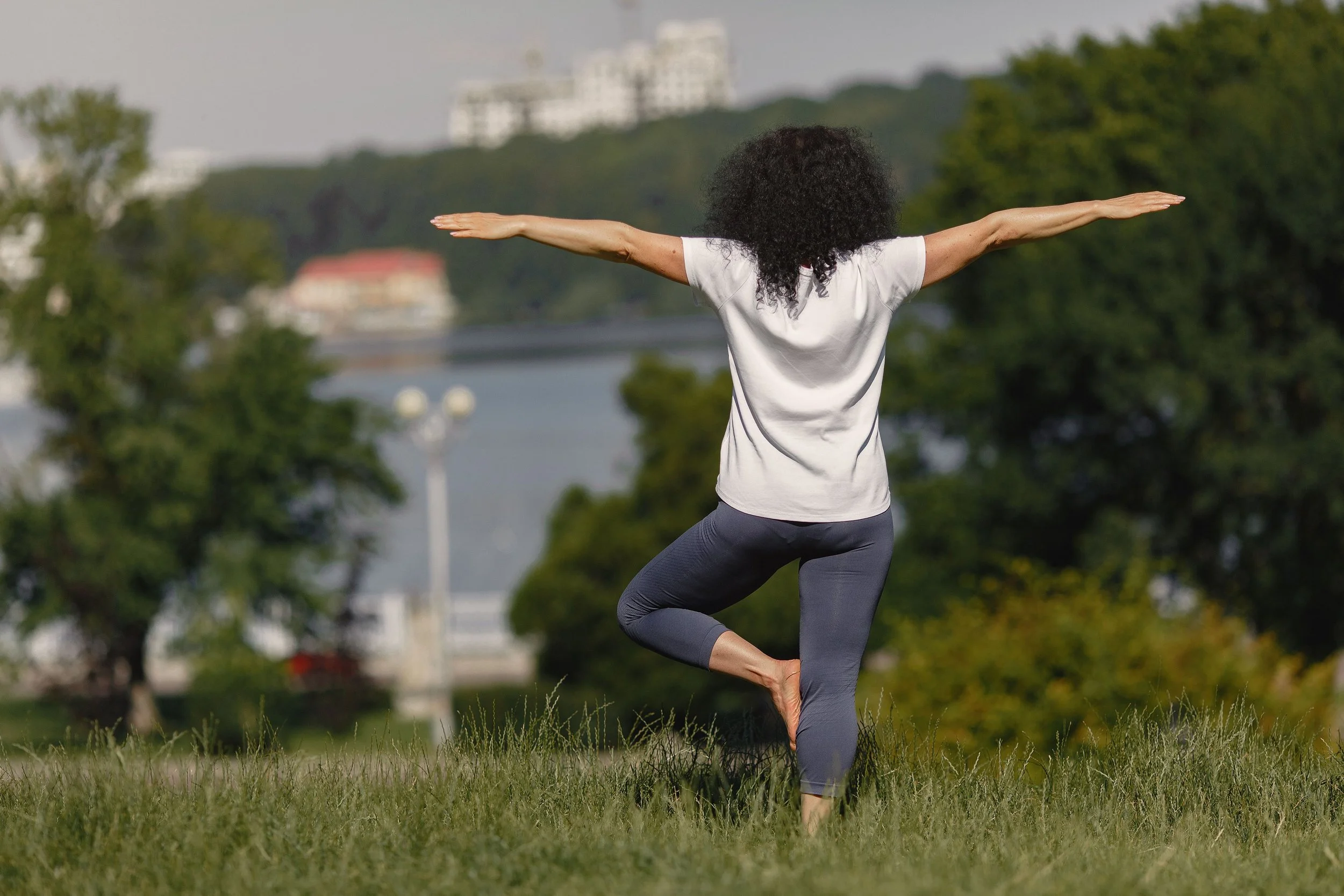
When you're exhausted but can't come down: This is the flatlined-but-wired state that chronic stress produces. You're tired, but sleep isn't restful. You feel numb more than activated. High-intensity movement here will often make things worse. What your nervous system actually needs is rhythmic, bilateral movement. A walk where your arms are swinging, a slow resistance band circuit, gentle yoga. Movement that reminds your body it is safe, not movement that convinces it to perform.
When you genuinely cannot: Some days, your nervous system has nothing left to give and adding a workout is not care. It's another demand on a system that's already overwhelmed. On those days, ten minutes of intentional breathwork, a short walk outside, or simply lying on the floor and feeling the ground beneath you is a legitimate movement practice. Your body returning to baseline is the work.
What This Actually Looks Like in Practice
In my work as both a licensed therapist and a certified trauma-informed personal trainer, I don't ask clients to just show up and move. I ask them how they arrived. What their week held. What their nervous system is carrying that day. Then we build from there.
This is different from traditional personal training, which assumes you bring a blank slate and the program provides the structure. For high-achieving women carrying the weight of their work, their families, their communities, and a world that keeps generating new reasons to be afraid, a blank slate isn't a realistic starting point.
Movement that accounts for what you're actually carrying is movement that can actually hold.
Frequently Asked Questions
-
This is more common than most fitness culture acknowledges, and it's usually a sign that your workout is adding to your sympathetic nervous system load rather than discharging it. High-intensity exercise temporarily elevates cortisol. In most circumstances, the body recovers quickly and you feel better. But when you're already running on chronic stress, that temporary spike can tip a system that was already near its limit. If you consistently feel worse after working out, the answer isn't to push harder. It's to look at the type of movement and your baseline nervous system state before you start.
-
Yes, and the research is clear on this. Chronic stress disrupts behavioral patterns, including exercise habits, because the nervous system prioritizes survival over maintenance behaviors. When your body perceives ongoing threat, it's not going to cooperate easily with routines that require long-term thinking. This is not a motivation failure. It's your nervous system operating exactly as designed in a context it wasn't built for.
-
It depends on what kind of stressed. If you're activated and wired, moderate-to-vigorous movement can help discharge the stress hormones your body has been holding. A brisk walk, strength training, anything with a rhythm. If you're exhausted and depleted, lower-intensity bilateral movement is more effective: walking, gentle resistance work, slow yoga. The research shows that moderate, regular exercise produces the most reliable cortisol regulation over time. More intensity is not always better, and for anxious nervous systems, it can make things significantly worse.
-
Not inherently, but the headspace matters for what you choose to do. A dysregulated nervous system and a well-resourced one need different things from movement. The mistake is applying a one-size program regardless of where you are that day. If you can check in with your body before you start, tired but capable, or genuinely overwhelmed, and match your movement to that state, you're far more likely to feel better afterward than if you push through a high-intensity session on a day when your system has nothing left.
-
Because the nervous system doesn't close the tab the way your browser does. Chronic exposure to threat-based information, even when you're not actively consuming it, keeps the HPA axis primed. Your body learned from repeated exposure that threat information is relevant and coming, so it stays on alert. This is why you might feel tension or anxiety hours after putting your phone down. The physical symptoms follow the nervous system's state, not just your conscious awareness of what you just read.
-
Yes, in a few specific ways. Trauma-informed training starts with a check-in: what's your energy, what's your stress load, what are you carrying today? Movement choices are made from that starting point rather than from a fixed program. Emotional experience is welcome in the session, not managed away from it. And rest is treated as part of training, not as evidence that you didn't try hard enough. For people whose nervous systems are chronically activated, by the news, by the demands of their lives, by carrying what this moment in history asks of certain communities, that difference is not small.
If this named something you've been carrying, a free consultation is a low-pressure conversation about what you need and whether trauma-informed training is the right fit. No pitch, no pressure.
About Meagé:
Meagé Clements is a licensed clinical social worker and certified trauma-informed personal trainer based in Gaithersburg, Maryland. Her work sits at the intersection of nervous system regulation, somatic awareness, and sustainable movement. As featured in Oprah Daily. She works with clients virtually worldwide and in person in the DMV area.
Li, X., Huang, J., & Zhu, F. (2025). The optimal exercise modality and dose for cortisol reduction in psychological distress: A systematic review and network meta-analysis. Sports, 13(12), 415. doi:10.3390/sports13120415
Physiological Changes in the Autonomic Nervous System Under Chronic Stress: A Systematic Review. Journal of Science in Medicine and Life (2025).
George, A. S. et al. (2024). Reclaiming our minds: Mitigating the negative impacts of excessive doomscrolling. PUMRJ. doi:10.5281/zenodo.13737987
Stults-Kolehmainen, M. A. & Sinha, R. (2014). The effects of stress on physical activity and exercise. Sports Medicine, 44(1), 81–121. doi:10.1007/s40279-013-0090-5