

High-Functioning Anxiety: What It Is, Why It's Exhausting, and Why the Gym Alone Won't Fix It

I want to talk about the version of anxiety that doesn't look like anxiety from the outside.
The kind that gets you to every meeting on time, keeps your inbox managed, makes you the person everyone else leans on, and leaves you lying awake at 2am running through tomorrow's to-do list while your body pretends to rest. The kind that gets mistaken for ambition, dedication, and strength, by other people and sometimes by you.
If you recognize yourself in that description, you may be living with what is increasingly called high-functioning anxiety. And if you have been trying to exercise your way out of it, I want to tell you what I tell my clients: the gym is not the problem, and it might not be the complete solution you are hoping for either.
What Is High-Functioning Anxiety?
High-functioning anxiety is not a formal clinical diagnosis. It does not appear in the DSM-5 as its own category. What it describes is a pattern: anxiety that coexists with high performance, often in people whose external lives look organized, capable, and successful while their internal experience is something closer to constant vigilance, chronic worry, and an inability to genuinely rest.
High-functioning anxiety describes someone who appears calm but manages frequent anxiety. The pattern often mirrors generalized anxiety disorder in its internal experience, including overthinking, perfectionism, and a persistent low-level dread that something is about to go wrong, even when the evidence doesn't support it.
A 2024 poll by the American Psychiatric Association revealed that 43% of U.S. adults feel more anxious than the previous year. What that number doesn't capture is how many of those people are simultaneously continuing to function at a high level, showing up, delivering, performing, while quietly running on fumes.
The reason high-functioning anxiety is so often missed, including by the people who have it, is that the very coping strategies it produces, over-preparing, over-achieving, over-functioning, look like assets rather than symptoms. You got promoted. You delivered the project. You took care of everyone. The anxiety worked. Until it didn't.
Why the Gym Doesn't Fix It On Its Own
Exercise is genuinely one of the most evidence-supported interventions for anxiety. A 2024 review of exercise interventions for anxiety disorders found consistent evidence that physical activity reduces anxiety symptoms across multiple study designs and populations. I am not here to argue against movement as medicine. I prescribe it.
What I want to challenge is the specific way high-functioning anxiety tends to approach exercise, and why that approach can actually reinforce the problem rather than resolve it.
When your nervous system is in a chronic state of activation, the way you engage with exercise tends to reflect that. The intensity becomes another deliverable. The workout becomes another performance metric. Missing a session becomes evidence of failure. Completing it becomes a release valve that feels good temporarily and then needs to be refilled the next day.
Research on exercise and anxiety indicates that moderate-intensity resistance training may be particularly effective in alleviating anxiety symptoms, and that the relationship between intensity and outcome is not linear. In other words, more is not always better. For a nervous system already running on overdrive, pushing harder can add to the cortisol load rather than reduce it.
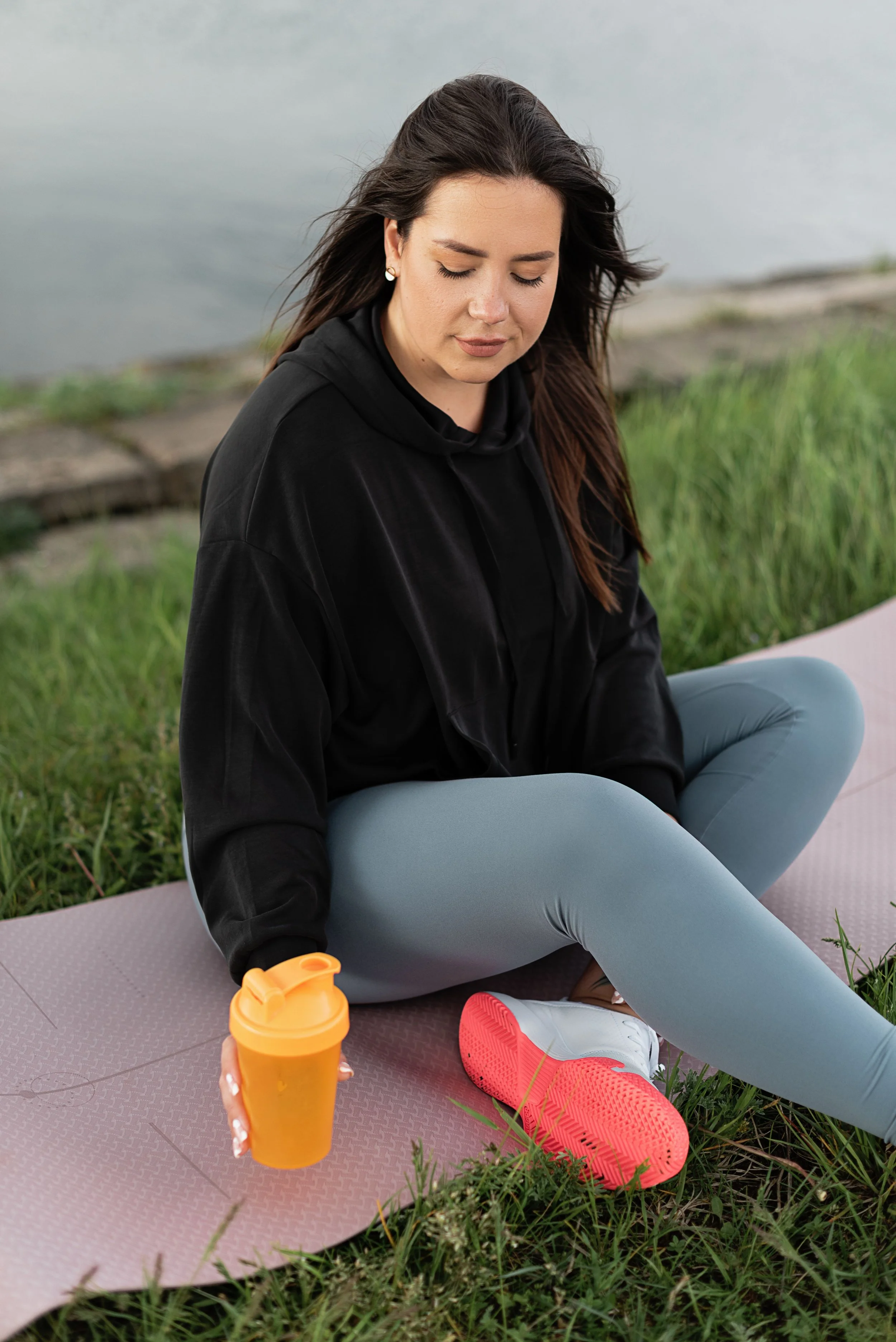
What I see consistently in my work as both a therapist and a personal trainer is this: high-functioning anxiety doesn't just affect whether you exercise. It affects how you exercise, what you expect from it, and what you feel when it isn't enough. The gym can become another arena for the same performance anxiety that is exhausting you everywhere else.
What It Actually Feels Like
The signs of high-functioning anxiety are worth naming specifically, because they often get attributed to personality rather than recognized as a nervous system pattern.
You find it difficult to delegate because handing things off feels more stressful than just doing it yourself. Rest feels uncomfortable rather than restorative.
Downtime comes with an undercurrent of guilt or a sense that something important is being missed. Perfectionism and anxiety frequently go hand in hand, with individuals setting unrealistically high standards for themselves and feeling disappointed even when they perform well. Mistakes feel disproportionately catastrophic. The finish line keeps moving.
Physically, high-functioning anxiety tends to live in the body in ways that are easy to rationalize away. Muscle tension that you write off as sitting at a desk too long. Headaches that you attribute to screen time. A jaw that aches in the morning. Digestive issues that come and go. A heart rate that stays elevated even when you're supposedly relaxing. Sleep that technically happens but never quite restores.
Some experts believe people with high-functioning anxiety often endure their symptoms in silence, thinking their symptoms are not significant enough to warrant help, or fearing that they may appear out of control if the condition becomes known to others.
That last part is the piece I want to stay with for a moment. The fear of appearing out of control. For high-achieving women, particularly those who have spent their lives being the capable one, the reliable one, the one who holds it together, that fear is not small. It is often the thing that keeps them from seeking help long after the internal cost has become significant.
The Nervous System Is the Actual Problem
Here is the clinical reframe I offer clients who come to me after years of managing anxiety through sheer productivity and intense exercise: the goal is not to manage the anxiety better. The goal is to address the nervous system state that produces it.
High-functioning anxiety is not a character trait. It is not ambition. It is a nervous system that learned, somewhere along the way, that it is not safe to stop. That rest is dangerous. That if you slow down, something will fall apart. That the only way to stay okay is to keep moving, keep producing, keep being the person who has it together.
That learning made sense in the context where it developed. It does not necessarily serve you now.
Research published in Nature in 2024 highlighted that individuals with anxiety disorders exhibit increased activation in brain regions including the bilateral insula and medial prefrontal cortex. These are the regions involved in self-monitoring, interoception, and the detection of threat. A nervous system that has been trained to stay hypervigilant will continue doing so, regardless of how productive or successful you are, because productivity is not the same as safety.
This is where movement, approached differently, can do something that talk therapy alone sometimes cannot reach. Not because exercise fixes the nervous system, but because movement that is calibrated to your actual state, that starts with a check-in rather than a program, that accounts for what you are carrying rather than demanding you perform on top of it, can begin to teach the nervous system that slowing down is survivable. That rest does not produce collapse. That you can be in your body without it being a threat.

What Trauma-Informed Training Offers That the Gym Doesn't
In a standard fitness context, you show up to the gym and you follow the program. The program doesn't ask how you're doing. It doesn't notice that you've slept poorly for a week, that your shoulders are up near your ears, that you're using the workout to outrun something you haven't named yet. It just requires output.
Trauma-informed training starts differently. Before we touch a movement, we check in. What's your energy today? What's your nervous system state? What are you carrying that might shape what this session needs to look like? And then we build from there, not from what the program says, but from what your body can actually receive.
For someone with high-functioning anxiety, that shift is significant. It introduces the experience of having your internal state matter in a movement context, often for the first time. It creates a practice of checking in with yourself rather than overriding yourself. And over time, that practice transfers. The body starts to learn that its signals are worth attending to, not managing away.
That is not a small thing. For many of the women I work with, it is the beginning of a fundamentally different relationship with themselves.
When Therapy Matters Too
I want to be honest with you about something: movement alone, even the most nervous-system-informed movement available, does not address the beliefs, patterns, and relational history that often sit underneath high-functioning anxiety.
The belief that your worth is tied to your productivity. The early experience of having to earn safety through performance. The family system where emotions were managed rather than felt. The professional environment where stopping meant losing ground. These are not things that get resolved by exercise, even excellent exercise.
Therapy, specifically trauma-informed therapy that works at the level of the nervous system and the underlying relational patterns, is often what makes the difference between managing high-functioning anxiety and actually shifting it. The movement work and the clinical work together reach something that neither does alone.
If you are in the DMV area, I offer both at this practice, not as a hybrid session that blurs the lines, but as two distinct services that are designed to complement each other. Virtual therapy is available throughout Maryland, Washington DC, and Virginia. Trauma-informed personal training is available virtually worldwide and in person in Gaithersburg, Maryland.
Common Questions About High-Functioning Anxiety, Therapy, and Exercise
-
High-functioning anxiety is not a formal diagnosis but a recognized pattern in which anxiety symptoms coexist with high external performance. If you consistently meet your responsibilities, appear capable and composed to others, and simultaneously experience chronic worry, difficulty resting, perfectionism, people-pleasing, physical tension, and a persistent sense of being one step from falling apart, high-functioning anxiety may describe your experience. A 2024 poll by the American Psychiatric Association found that 43% of U.S. adults report feeling more anxious than the previous year. Among high achievers, the pattern is often unrecognized because the symptoms produce behaviors that look like assets rather than distress signals.
-
Exercise is one of the most evidence-supported tools for reducing anxiety symptoms and it is a meaningful part of any comprehensive approach to managing anxiety. However, it is not a cure, and for people with high-functioning anxiety specifically, the way exercise is approached matters as much as whether it happens. When exercise becomes another performance metric, another thing to optimize, another way to manage rather than feel, it can reinforce the same nervous system pattern that produces the anxiety. Trauma-informed movement, which starts with nervous system state and calibrates accordingly, tends to produce more sustainable relief than high-intensity exercise pursued as an escape or an override.
-
This is more common than fitness culture acknowledges and is usually a sign that your workout is adding to your sympathetic nervous system load rather than discharging it. High-intensity exercise temporarily elevates cortisol. When your nervous system is already chronically activated, that temporary spike can tip a system that was already near its ceiling. Research suggests that moderate-intensity exercise produces the most reliable anxiety reduction for people with anxiety disorders. If you consistently feel worse after working out, the answer is not to push harder. It is to look at your baseline state and the type of movement you are choosing relative to that state.
-
Often, yes, though not always in the ways people expect. Trauma does not require a dramatic single event. Environments that required chronic vigilance, conditional love, emotional unavailability, early responsibility, or the consistent message that being productive is how you stay safe can all produce nervous system patterns that look like high-functioning anxiety in adulthood. The connection is not always obvious because the anxiety is organized and functional rather than disruptive. Trauma-informed therapy can help identify and address the underlying patterns without requiring you to have a dramatic story to justify the work.
-
Approaches that work at both the cognitive and somatic level tend to produce the most comprehensive results. EMDR can address the underlying experiences that trained the nervous system toward hypervigilance. IFS-informed therapy can work with the parts that drive perfectionism and over-functioning, building a more compassionate internal relationship. Somatic therapy addresses the body-held patterns that talk therapy alone often cannot reach. In practice, therapy for high-functioning anxiety often looks like slowing down, building the capacity to tolerate uncertainty and rest, and developing an internal sense of safety that does not depend on continued performance.
-
The free consultation at this practice is a low-pressure conversation about where you are and what kind of support makes sense. I offer trauma-informed therapy virtually throughout Maryland, Washington DC, and Virginia, and trauma-informed personal training virtually worldwide and in person in Gaithersburg, Maryland. Many clients find that addressing both the clinical and physical dimensions at the same time produces the most meaningful shift. You do not need to have it figured out before you reach out.
If this named something you have been carrying quietly, the free consultation is a low-pressure conversation about what support could look like. No pitch, no pressure.
About Meagé: Meagé Clements is a licensed clinical social worker and certified trauma-informed personal trainer based in Gaithersburg, Maryland. She offers therapy virtually throughout Maryland, DC, and Virginia, and trauma-informed personal training virtually worldwide and in person in the DMV. As featured in Oprah Daily.